
Education
Sexual slavery is the most profitable illicit industry in the United States (AAR of 90%)
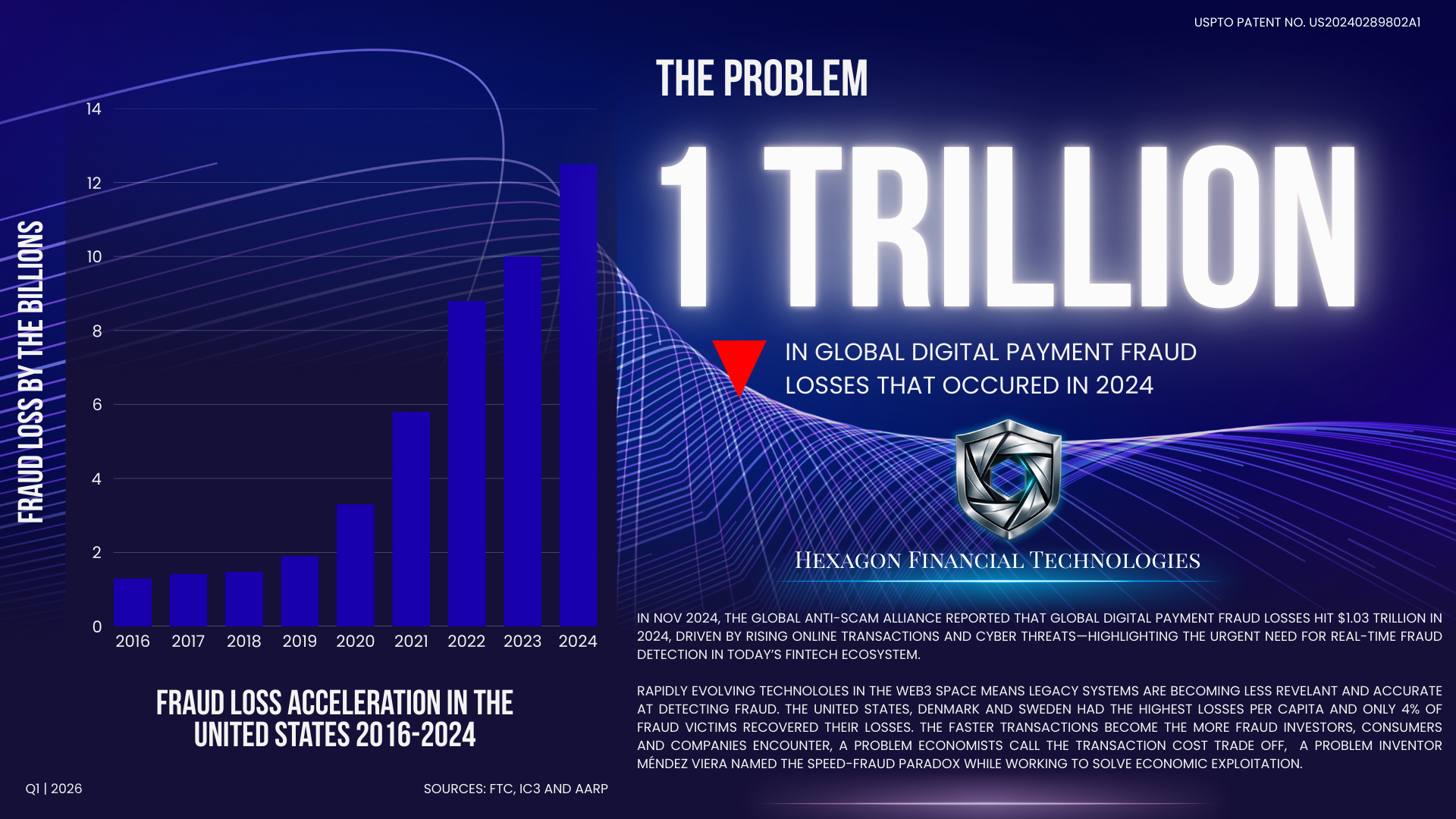
Global digital payment systems, which exceeded $1 trillion in volume in 2024 according to the Global Anti-Scam Alliance, have become a critical enabler of this exploitation.
Learn the Systems Behind Modern Exploitation
Modern slavery is not sustained by chains—it is sustained by systems. Financial fraud, regulatory gaps, and behavioral coercion form the invisible infrastructure that allows exploitation to persist at scale.
Understanding these mechanisms is essential to building systems capable of detecting and intervening before exploitation escalates into human rights abuse.
We are worse off today than we were in the 1800s when chattel slavery was formally abolished—not because exploitation disappeared, but because it evolved. Modern slavery no longer relies on public chains and plantations; it operates through financial systems, information asymmetry, and institutional blind spots. In this new era, exploitation is quieter, more complex, and often rendered invisible by legality, bureaucracy, and distance.
Modern slavery is sustained through wage exploitation, debt manipulation, document fraud, and behavioral coercion—mechanisms that trap individuals in cycles they cannot exit. Narratives promoted through mass communication and propaganda reinforce these systems by shifting blame onto individuals, suggesting that poverty is a personal failure rather than the result of suppressed wages, restricted credit access, and engineered economic vulnerability. These same mechanisms are used to radicalize vulnerable populations, particularly young men, normalizing dehumanization and making exploitation and violence more socially acceptable.
What allows modern slavery to persist is not a lack of awareness, but a failure of systems to detect escalation, govern incentives, and intervene before harm compounds. Financial opacity, fragmented oversight, and misaligned incentives create the infrastructure through which exploitation scales across supply chains, labor markets, and global industries.
Understanding these mechanisms is essential. Ethical consumption and slavery-free supply chains matter, but so do systems capable of verifying, tracing, and governing behavior at scale. While U.S. law requires Fortune 500 companies to publish modern slavery statements, disclosure alone is insufficient without enforcement, accountability, and technological systems that can identify risk patterns before exploitation becomes normalized.
Modern slavery is not a historical anomaly—it is a catastrophic and intentional systems failure. Addressing it requires moving beyond awareness toward architecture, governance, and prevention. That’s why our work as Hexagon Financial Technologies focuses on understanding the systems behind exploitation so they can be redesigned to prevent it.

Jánelle Marina’s Life Experiences Fuel Her Drive for Systems Reform
Born in Bronxville, New York, Jánelle Marina Méndez Viera brings a rare interdisciplinary background spanning finance, human rights, and military service. Her early experiences inside complex power structures shaped a lifelong focus on accountability, governance, and the design of systems capable of preventing exploitation at scale. Today, her work centers on advancing transparency, ethical financial infrastructure, and institutional resilience through research, technology, and leadership.